How to Plan a Budget-Friendly Road Trip with a Rental Vehicle in India

October 12, 2026 · 9 reads
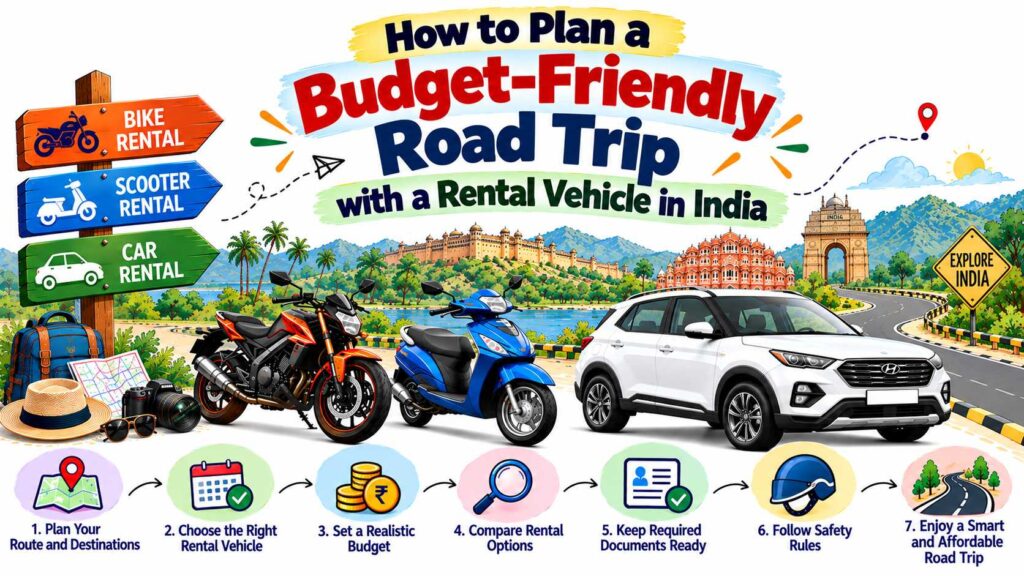
Introduction
A road trip gives you the freedom to explore new places at your own pace. You can stop at local markets, visit quiet villages, and enjoy scenic roads along the way. However, a good trip needs careful planning, especially when you rent a vehicle.
Choosing the right bike, scooter, or car can help you manage your travel budget. You also need to consider fuel, food, tolls, parking, and rental fees. A low rental price does not always mean a low total cost.
This guide explains how to plan a budget-friendly road trip in India. You will learn how to choose a rental vehicle, compare costs, prepare your documents, and avoid common mistakes. You will also find practical safety tips for a smoother journey.
1. Choose the Right Vehicle for Your Trip
Your vehicle affects your comfort, travel time, and total spending. Think about your route, the number of passengers, and the luggage you need to carry.
Bike Rentals for Solo Travelers
A motorcycle may suit solo travelers who enjoy long rides and have suitable riding skills. It can work well for certain scenic routes and weekend trips. However, you should consider fuel costs, riding comfort, and road conditions before choosing a bike.
Choose a motorcycle that matches your experience. A powerful bike may not suit someone who rarely rides. Always wear a helmet and check the vehicle before departure.
Scooter Rentals for Short Trips
Scooters can work well for local sightseeing and short journeys. Many models use automatic transmission, which some riders find easier to handle. They may also help with parking in busy areas.
However, scooters may not suit every long-distance route. Check the distance, road surface, weather, and vehicle condition before planning your journey.
Self-Drive Cars for Families and Groups
A self-drive car may suit families, couples, and groups carrying luggage. It offers more space and shelter from rain and heat. It can also make long journeys more comfortable for several passengers.
Choose a car based on your group size and planned route. A larger car may cost more in rental fees and fuel. Make sure the vehicle has enough approved seats and working seat belts.
2. Compare Vehicle Options Before Booking
Compare vehicles based on your travel needs rather than appearance alone.
| Factor | Bike | Scooter | Self-drive car |
|---|---|---|---|
| Suitable trips | Solo journeys and selected road trips | Short local trips | Family holidays and group trips |
| Luggage space | Usually limited | Usually limited | Often more spacious |
| Parking | Usually easier | Usually easier | May need more space |
| Fuel expenses | Depend on the model and distance | Depend on the model and distance | Depend on the car and distance |
| Main concern | Riding skill and comfort | Road suitability and stability | Rental cost and parking |
Your best option depends on the route, weather, vehicle model, and rental conditions. Always confirm that the provider permits your planned journey.
3. Set a Realistic Road Trip Budget
A clear budget helps you control spending during your trip. Calculate the expected costs before confirming your rental.
Include All Major Expenses
Your road trip budget should cover:
- Vehicle rental: The main charge for using the vehicle.
- Fuel: Petrol, diesel, or charging costs, depending on the vehicle.
- Tolls: Road charges along your chosen route.
- Parking: Fees at hotels, attractions, and public parking areas.
- Food and drinks: Meals, snacks, and drinking water.
- Accommodation: Hotel or guesthouse costs for overnight stays.
- Security deposit: Money the provider may hold during the rental.
- Extra charges: Mileage fees, late-return charges, or other costs under the agreement.
- Emergency funds: Money for unexpected travel needs.
A security deposit differs from a normal trip expense because the provider may refund it. However, you still need enough money to cover it upfront.
Example of a Road Trip Budget
Consider this example for a short trip. The figures below are illustrative and do not represent current rental prices.
| Expense | Example cost |
|---|---|
| Vehicle rental | ₹2,000 |
| Fuel | ₹1,200 |
| Food and drinks | ₹800 |
| Tolls and parking | ₹400 |
| Accommodation | ₹1,500 |
| Emergency reserve | ₹500 |
| Total planned budget | ₹6,400 |
Your actual costs may differ by destination, season, vehicle, travel distance, and personal choices. Check current prices before finalizing your budget.
4. Book Your Rental Vehicle Carefully
Once you know your budget, start comparing rental options. Choose a provider that clearly explains its prices, policies, and vehicle conditions.
Compare the Complete Rental Terms
Check the following details before making a booking:
- Rental price and booking duration
- Vehicle availability for your travel dates
- Pickup and return locations
- Daily mileage limits
- Fuel and charging rules
- Security deposit and refund policy
- Insurance coverage and exclusions
- Cancellation and late-return charges
Read the rental agreement before making payment. Ask the provider to explain any unclear terms.
Explore Rental Options Online
Online rental marketplaces can help travelers explore different vehicle options. You can begin your search through MotoShare.asia and review the options currently listed.
Check the vehicle details, rental dates, and provider terms before making travel plans. Do not assume that every vehicle or rental service operates in every city. Confirm availability and the final price before booking.
5. Prepare Your Documents Before Departure
Missing documents can cause delays and create problems during your trip. Prepare everything before collecting the vehicle.
Check Your Driving Licence
You need a valid driving licence for the vehicle you plan to drive. Confirm the applicable rules and provider requirements before booking.
International visitors should check whether their licence meets Indian requirements. They may need additional documents, depending on their circumstances.
Keep Important Documents Ready
Depending on the rental agreement, you may need:
- A valid driving licence
- Accepted identity documents
- Booking confirmation
- Rental agreement
- Payment receipt
- Required vehicle documents
Confirm the exact requirements with the provider. Keep important documents secure and accessible during your journey.
6. Inspect the Vehicle Before Starting
Never rush through the vehicle inspection. A few simple checks can help you avoid problems on the road.
Follow these steps before departure:
- Check the tyres for visible damage.
- Test the brakes, lights, indicators, and horn.
- Adjust the mirrors for a clear view.
- Check the fuel level or battery charge.
- Look for scratches, dents, and broken parts.
- Take photographs of existing damage.
- Confirm that the required safety equipment is available.
- Save the provider’s emergency contact details.
Report any damage or mechanical problem before leaving. Do not use a vehicle that appears unsafe.
India’s road safety guidance also stresses valid licences and roadworthy vehicles. It advises drivers to check key parts before travelling.
7. Plan Your Route and Daily Stops
A good route can help you save time and avoid unnecessary spending. Plan your main stops before you begin driving.
Choose Practical Routes
Check road conditions, fuel stations, parking options, and rest stops along your route. Avoid adding too many destinations to one day.
Allow extra time for traffic and unexpected delays. If you travel through hills or remote areas, check weather conditions and fuel availability.
Avoid Driving When Tired
Long journeys can make drivers tired and less alert. Take regular breaks and stop when you feel sleepy. Share driving only with someone who meets the legal and rental requirements.
Avoid driving in unsafe weather or on unfamiliar roads beyond your skill level. Safety matters more than reaching a destination quickly.
8. Save Money During Your Road Trip
Small decisions can help you manage your travel budget without reducing your comfort.
Travel During Less Busy Periods
Rental prices and vehicle availability may change with demand. If your dates are flexible, compare different travel periods before booking.
Do not assume that every weekday or off-season date offers a lower rate. Check the actual price for your selected dates.
Pack Light
Heavy luggage can make a motorcycle or scooter harder to handle. It can also take up useful space in a car.
Carry only what you need. Keep bags secure and make sure they do not block your view or interfere with vehicle controls.
Plan Food and Fuel Stops
Choose convenient places for meals and refuelling. Check the fuel level before entering remote areas with fewer service stations.
Keep drinking water and basic travel supplies with you. Plan fuel stops around your route rather than waiting until the tank is nearly empty.
Compare the Cost of Different Vehicles
A bike may have a lower rental cost than a car, but it may not suit every group. Families may find that a car offers better comfort and luggage space.
Compare the full cost for your group. Include rental fees, fuel, tolls, parking, and any extra charges.
9. Understand Insurance and Return Policies
Rental agreements explain what happens if you damage the vehicle, return it late, or change your travel plans.
Check Insurance Coverage
Do not assume that rental insurance covers every type of loss. Ask about damage, theft, third-party liability, exclusions, and any amount you must pay after an incident.
Keep the provider’s emergency instructions with you. Report accidents or damage promptly and follow the agreement.
Follow the Return Conditions
Check the return time, location, fuel requirements, and inspection process. Return the vehicle as agreed to avoid possible extra charges.
Take photographs during the return inspection. Keep any confirmation that records the vehicle’s condition and return time.
10. Common Mistakes to Avoid
Many rental problems start with small oversights. You can reduce these risks by checking the details before departure.
- Choosing only the cheapest offer: Compare the full cost and included services.
- Ignoring mileage limits: Estimate your total distance before booking.
- Skipping the vehicle inspection: Photograph existing damage and report problems.
- Overlooking licence rules: Confirm that your licence covers the vehicle category.
- Assuming insurance covers everything: Read the policy terms and exclusions.
- Ignoring cancellation rules: Check fees and refund conditions.
- Planning an unrealistic route: Allow time for traffic, rest, and fuel stops.
- Returning the vehicle late: Plan enough time for the return process.
Careful planning can help you avoid extra costs and enjoy a more relaxed journey.
11. Road Trip Preparation Checklist
Use this checklist before leaving home.
- Confirm your route and travel dates.
- Choose a vehicle that suits your group.
- Compare rental prices and extra charges.
- Confirm your licence and document requirements.
- Read the rental agreement.
- Check insurance and deposit terms.
- Inspect the vehicle and photograph existing damage.
- Save emergency contact details.
- Check the weather and road conditions.
- Plan fuel stops, meals, and rest breaks.
- Confirm the return location and time.
- Keep emergency funds available.
This checklist helps you prepare for common travel needs before you start your journey.
Frequently Asked Questions (FAQs)
1. Which rental vehicle is best for a road trip in India?
The best vehicle depends on your route, budget, passengers, and driving skills. Bikes may suit solo riders, while cars often suit families and groups.
2. Is renting a bike cheaper than renting a car?
A bike may have a lower rental fee, but total costs depend on fuel, distance, deposits, and other charges. Compare the complete trip budget before deciding.
3. Can I rent a scooter for a weekend trip?
Some providers offer weekend rentals. Confirm the minimum rental period, vehicle availability, mileage limits, and return conditions before booking.
4. What documents do I need for a rental vehicle?
You generally need a valid driving licence for the vehicle category and any identity documents required by the provider. Requirements can vary by destination and rental company.
5. How can I reduce road trip expenses?
Compare rental offers, plan your route, estimate fuel costs, and avoid unnecessary stops. Include tolls, parking, food, and possible additional charges in your budget.
6. Should I pay a security deposit for a rental vehicle?
Some providers require a deposit. Check the amount, refund timeline, payment method, and possible deductions before agreeing to the rental.
7. Does rental insurance cover vehicle damage?
Coverage depends on the policy and rental agreement. Check exclusions, deductibles, theft protection, and your responsibility for damage before booking.
8. Can international tourists rent vehicles in India?
International visitors may rent vehicles if they meet applicable driving rules and provider conditions. Confirm licence acceptance and any additional document requirements before travelling.
9. What should I check before collecting a rental vehicle?
Check the tyres, brakes, lights, mirrors, fuel level, and visible damage. Take photographs and report any concerns before leaving.
10. Can I take a rental vehicle across state borders?
That depends on the rental agreement, vehicle documents, and applicable rules. Confirm permission with the provider before planning an interstate journey.
11. What happens if I return a rental vehicle late?
The provider may charge an extra fee or apply another condition in the agreement. Check the late-return policy and plan enough time to reach the return location.
12. How can MotoShare.asia help me plan a road trip?
You can explore the options listed on MotoShare.asia when researching rental vehicles. Check current availability, prices, provider details, and rental conditions before making a booking.
Conclusion
A successful road trip starts with a suitable vehicle and a clear plan. Choose a bike, scooter, or car based on your route, travel group, and budget. Compare the full rental cost instead of relying only on the advertised price.
Prepare your documents, inspect the vehicle, and understand the insurance and return policies. Plan fuel stops, check road conditions, and allow enough time for rest. These steps can help you avoid common rental problems.
When you are ready to explore rental options, visit MotoShare.asia. Confirm the current listing details and rental terms before booking. With careful preparation, you can enjoy a more comfortable and well-planned road trip across India.
Leave a Reply