Build a Stronger Financial Future: Easy Ways to Budget, Save, and Spend Smartly

October 10, 2026 · 9 reads
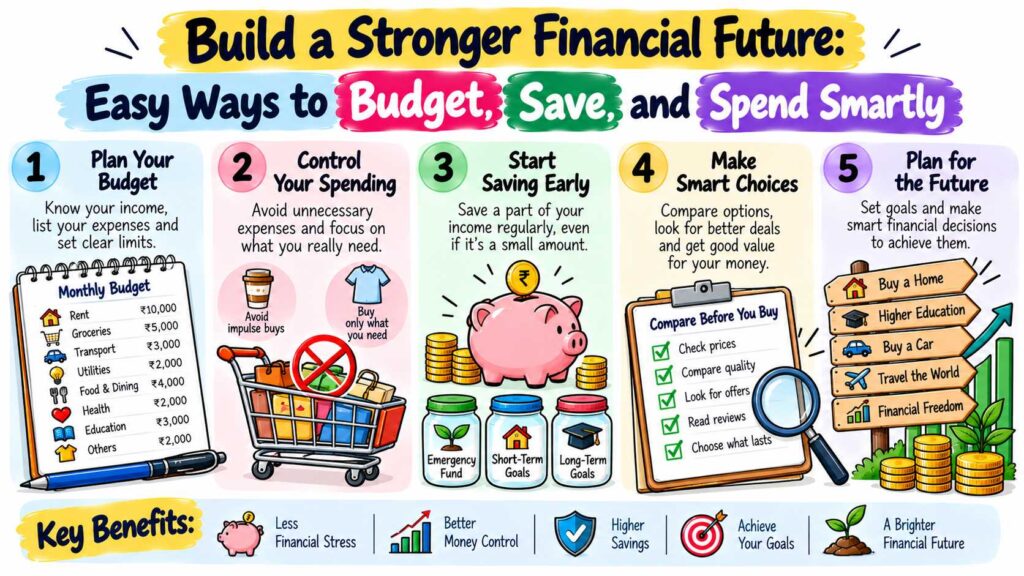
Introduction
Money plays a big role in our daily lives. We use it to buy food, pay bills, travel, and care for our families. Yet, many people struggle to keep track of where their money goes. Small expenses can grow, and sudden bills can upset even a good plan.
The good news is that you do not need a large income to manage money well. You need clear goals, simple habits, and regular checks. These steps can help you control spending and save for future needs. They can also help you avoid money stress and make better choices.
MoneyVoid.com focuses on simple ways to understand spending, manage costs, and improve financial habits. Let us explore practical steps that can help you build a stronger money plan.
1. Give Every Part of Your Income a Purpose
A money plan works better when you know how you want to use your income. Start by writing down how much money you receive each month. Include your salary, business income, freelance payments, and other regular earnings.
Next, list the main ways you spend money. These may include rent, food, transport, school fees, bills, and loan payments. Also, leave room for savings and personal needs.
Divide your income into clear groups:
- Needs: Food, housing, medicine, and basic bills.
- Savings: Money for future goals and emergencies.
- Debt payments: Amounts you owe to lenders.
- Wants: Eating out, shopping, entertainment, and hobbies.
This simple plan helps you see where your money should go. It also helps you spot areas where you may spend too much.
2. Check Your Spending Before Making Changes
Many people try to save money without knowing their spending habits. This can make saving feel hard. Before you change your budget, study your expenses for at least one month.
Write down every payment, even small ones. Record cash purchases, online orders, food deliveries, and digital payments. Group each expense by type.
At the end of the month, look for patterns. You may notice that you buy snacks often or pay for services you rarely use. You may also find that travel costs more than you expected.
Do not blame yourself for past choices. Use your records to make better choices next month. A clear picture of your spending gives you a stronger starting point.
3. Create a Budget That Fits Your Life
A budget is a plan for your income. It helps you decide how much to spend, save, and repay. A useful budget should match your real needs, not an ideal life.
One common method is the 50/30/20 rule. It suggests using about 50% of your income for needs, 30% for wants, and 20% for savings and debt payments. These amounts are only a guide. You can adjust them to fit your income and living costs.
For example, a person who earns ₹30,000 each month might plan:
- ₹15,000 for basic needs.
- ₹9,000 for wants.
- ₹6,000 for savings and extra debt payments.
Your needs may take more than half your income. That is common in places with high rent or travel costs. Start with a budget you can follow. Change it as your income or needs change.
4. Cut Costs Without Making Life Miserable
Saving money does not mean giving up every activity you enjoy. It means spending with care and avoiding waste.
Start with small changes. Compare prices before buying costly items. Prepare meals at home when possible. Use a shopping list to avoid extra purchases. Check whether you can lower your phone, internet, or electricity costs.
Try these simple ideas:
- Wait one day before buying something you do not need.
- Set a limit for online shopping.
- Carry water and simple snacks when you go out.
- Share rides when it is safe and practical.
- Repair useful items instead of replacing them at once.
- Review your regular bills for better options.
Small savings can add up over time. For example, saving ₹100 each week gives you about ₹5,200 over a year. The result may seem small at first, but steady habits can make a difference.
5. Build a Safety Fund for Hard Times
Life does not always follow a plan. A health problem, job loss, car repair, or family need can create an urgent expense. Without savings, you may need to borrow money.
An emergency fund helps you handle these events. Start with a small target, such as ₹5,000 or one month of essential expenses. Then work toward saving enough to cover three to six months of basic costs, if your income allows.
Keep this money separate from your daily spending account. Choose a safe and easy-to-access place for it. Do not use it for shopping, holidays, or planned purchases.
You do not need to save the full amount at once. Add a fixed amount whenever you receive income. Even small deposits can help you build a safety net.
6. Make Saving a Habit, Not a Last Step
Many people save only when money remains at the end of the month. This can fail when bills and daily costs use up their income.
Try saving soon after you receive your income. Choose an amount that fits your budget. You can start with ₹200, ₹500, or another amount you can manage. Increase it when your income grows.
Give each savings goal a name. For example, you might save for:
- School fees.
- A home repair.
- A family trip.
- A new phone or computer.
- A future business.
- Retirement.
Clear goals can make saving feel more useful. They also help you avoid using saved money for unrelated needs.
7. Keep Track of Subscriptions and Regular Payments
Small monthly payments can quietly reduce your available money. Music apps, video services, storage plans, games, and other memberships may all charge your account.
Review these payments at least once every few months. Check your bank statements and payment apps. Write down the service name, cost, and payment date.
Ask yourself three questions:
- Do I still use this service?
- Does it offer enough value for the cost?
- Can I switch to a cheaper plan?
Cancel services you no longer need. Check the terms before you cancel, and keep proof of the cancellation. Also, watch for free trials that turn into paid plans.
A simple list of regular payments can help you avoid surprise charges. It can also show how much you could save by removing unused services.
8. Prepare for Bills That Do Not Arrive Every Month
Some costs appear only once or twice a year. These may include school costs, insurance premiums, vehicle servicing, festivals, or annual memberships.
If you forget about these bills, they can damage your monthly budget. A better plan spreads the cost across several months.
Suppose your yearly insurance bill costs ₹12,000. You could set aside ₹1,000 each month. When the payment date arrives, the money will already be available.
Make a list of known yearly costs. Write down the expected amount and due date. Divide each cost by the number of months left before payment. Then add that amount to your monthly plan.
This method helps you prepare for expected costs instead of treating them as emergencies.
9. Handle Debt With a Clear Plan
Debt can make it harder to save and meet daily needs. If you have several loans or credit card balances, list each debt with its balance, interest rate, minimum payment, and due date.
Always try to pay at least the required amount on time. Late payments can lead to extra fees and other problems.
Next, choose a repayment method that fits your needs.
Highest-interest method: Pay extra toward the debt with the highest interest rate. Keep making required payments on your other debts. This method can reduce the total interest you pay.
Smallest-balance method: Pay extra toward the smallest debt first. This can help you see progress sooner and stay motivated.
Both methods can work when you follow them steadily. Avoid taking new debt for non-essential purchases while you repay existing balances. If you cannot meet your payments, contact your lender early to ask about possible options.
10. Plan Carefully When Your Income Changes
Some people receive the same salary each month. Others earn money through freelance work, sales, seasonal jobs, or small businesses. Their income may rise and fall.
If your income changes often, build your budget around your essential costs. Work out the minimum amount you need for housing, food, bills, transport, and debt payments.
When you earn more than usual, do not spend all the extra money at once. Use part of it to build savings, pay down debt, or prepare for a slower month.
You can also use a simple income record. Write down how much you earn each week or month. After several months, look for patterns. This can help you plan for busy and quiet periods.
Try to keep some money aside during stronger months. That money can help cover basic needs when earnings fall.
11. Help Your Small Business Control Cash Flow
Small business owners need to track both income and spending. A business may earn good sales but still struggle to pay bills if customers pay late or costs rise too quickly.
Cash flow means the money moving into and out of a business. Owners should record sales, customer payments, wages, rent, supplies, software, and other costs.
Two useful measures can help:
- Burn rate: How quickly a business spends money when its costs exceed its income.
- Runway: How long the business can keep running with its available cash at the current burn rate.
For example, if a business has ₹3,00,000 in available cash and spends ₹50,000 more than it earns each month, its simple cash runway is about six months. This estimate assumes the monthly shortfall stays the same.
Owners should check these figures often. They can also review unused software plans, negotiate costs, and follow up on unpaid invoices. Careful cash planning helps business owners spot trouble earlier.
12. Protect Your Money When You Pay Online
Digital payments make daily tasks easier. However, scammers may try to steal money or personal details through fake calls, messages, links, and payment requests.
Use these safety habits whenever you make a digital payment:
- Never share your UPI PIN, password, or one-time password.
- Enter your UPI PIN only when you intend to approve a payment.
- Check the receiver’s name and amount before you pay.
- Do not trust callers who claim they must verify your bank account.
- Avoid unknown links that promise prizes, refunds, or urgent rewards.
- Use a screen lock and keep your payment apps updated.
- Turn on bank alerts so you can spot unusual activity.
Remember that receiving money through UPI does not require you to enter your UPI PIN. A person who asks you to enter it to receive a refund may be trying to trick you.
If you notice an unauthorized payment, contact your bank or payment provider at once. In India, you can also call the cybercrime helpline at 1930 to report financial cyber fraud. Report the incident as quickly as possible and keep the complaint details.
13. Choose a Simple System to Track Your Money
The best money tracking method is one you can use regularly. You do not need a complex tool to begin.
You can choose a notebook, a spreadsheet, or a budgeting app. Each option can help you record income, expenses, savings, and debt payments.
A notebook may work well if you prefer writing by hand. A spreadsheet can help you sort costs and calculate totals. A budgeting app may offer useful features, such as expense groups or spending summaries.
MoneyVoid.com aims to make money tracking and financial planning easier through clear, practical tools and guidance. Check any tool’s available features before relying on it for your needs.
Whichever method you choose, follow these habits:
- Record expenses soon after you make them.
- Check your totals each week.
- Compare actual spending with your budget.
- Update your plan when your income or costs change.
- Keep your financial details private and secure.
A simple system can help you notice problems before they grow. It can also show your progress over time.
Frequently Asked Questions (FAQs)
1. What is the first step toward better money management?
Start by writing down your income and expenses. This helps you understand how much money comes in and where it goes. You can then build a budget that fits your needs.
2. How much money should I save every month?
Save an amount that fits your income and essential costs. You can begin with a small amount and increase it over time. Regular saving matters more than starting with a large amount.
3. Is the 50/30/20 budget rule right for everyone?
No. It is a guide, not a strict rule. You can change the percentages to match your income, housing costs, family needs, and debt payments.
4. How can I stop spending money on things I do not need?
Make a shopping list and set a spending limit. Wait before buying non-essential items. Review your past purchases to find habits you can change.
5. Where should I keep my emergency savings?
Choose a safe place where you can access the money when needed. Keep it separate from the account you use for daily spending. Check fees, access rules, and safety before choosing an account.
6. Should I pay off debt or save money first?
Try to keep a small emergency fund while making required debt payments. Then consider paying extra toward high-interest debt. Your best plan depends on your income, debt costs, and urgent needs.
7. How can I save money when my income is low?
Focus first on essential needs and avoid new debt where possible. Start with small savings, review regular bills, and reduce costs that offer little value. Do not ignore food, health, or other basic needs to meet a savings target.
8. Why should I review my subscriptions?
Subscriptions can charge you every month or year. Some may no longer serve a useful purpose. Reviewing them helps you remove unwanted costs and keep more money for important goals.
9. What should I do if my income changes each month?
Build your budget around your essential costs. Track income over time and save more during stronger months when possible. This can help you cover basic bills during slower periods.
10. What does cash runway mean for a business?
Cash runway estimates how long a business can continue using its available cash at its current rate of spending. It can help owners plan costs and decide when they need more income or funding.
11. What should I do if I fall for a UPI scam?
Contact your bank or payment provider immediately. In India, call 1930 to report financial cyber fraud as soon as possible. Save payment details, messages, and complaint numbers for follow-up.
12. Do I need a paid app to manage my money?
No. You can start with a notebook or spreadsheet. A paid app may offer extra features, but it should match your needs and budget. Always check privacy and security before sharing financial details.
Final Thoughts
A stronger financial future grows from small steps repeated over time. You do not need to fix every money problem in one day. Start with a clear record of your income and expenses. Then build a budget, save what you can, and prepare for future costs.
Review your progress each month. Change your plan when life changes. Protect your money during online payments, and seek trusted help when debt becomes hard to manage.
MoneyVoid.com aims to support better financial habits with practical guidance and simple money tools. With steady effort and clear choices, you can gain more control over your spending and move closer to your financial goals.
Leave a Reply