Motorcycle Rental in Canada: How to Choose the Right Bike and Plan Your Journey

October 13, 2026 · 24 reads
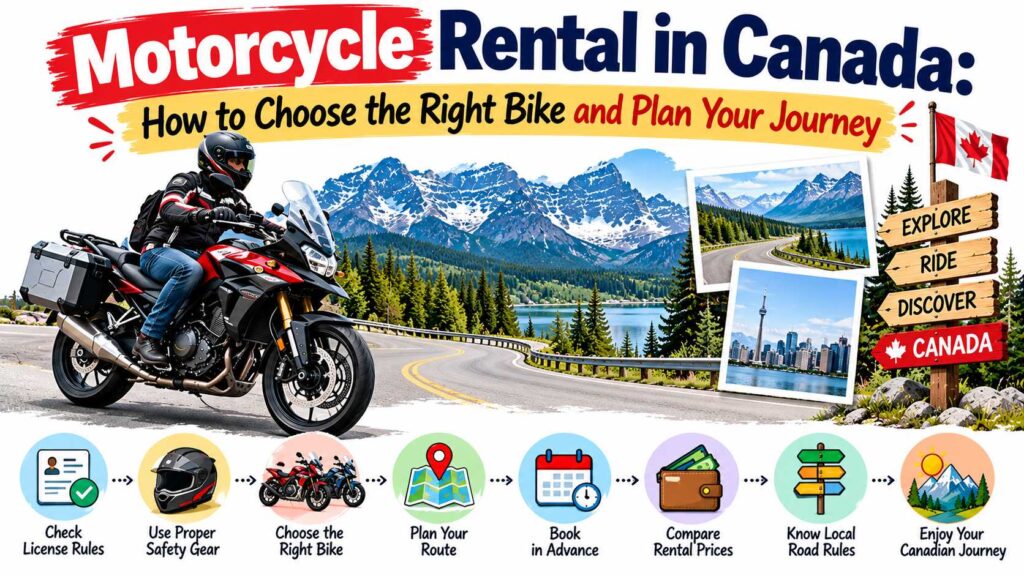
Introduction
A motorcycle trip gives you a fresh way to explore Canada. You can discover quiet towns, enjoy open highways, and visit beautiful natural places. Renting a bike also lets you travel without buying one.
However, the right rental takes some planning. You need a suitable motorcycle, a valid licence, clear insurance terms, and a realistic budget. You should also prepare for changing weather and road conditions.
This guide covers the key steps for renting a motorcycle in Canada. It explains how to compare bikes, understand rental fees, check safety gear, and plan a comfortable trip. You will also find comparison tables, practical advice, and answers to common rental questions.
1. Start With Your Travel Plans
Before looking for a motorcycle, decide how you want to use it. Your route, travel time, and riding skills will help you choose the right bike.
A short city ride has different needs from a week-long road trip. City travel may require easy handling and simple parking. Longer trips may need comfortable seating, luggage space, and better wind protection.
Think about these questions before searching:
- Will you ride around a city or travel between towns?
- How many days will you need the motorcycle?
- Will you carry a passenger?
- How much luggage will you bring?
- Do you have experience with larger motorcycles?
- Will your route include mountain roads or gravel sections?
Your answers will help you narrow down your choices. They can also help you avoid paying for features you do not need.
2. Compare Motorcycle Types Before Booking
Motorcycles come in different sizes and designs. Each type offers benefits for certain trips. The table below can help you compare the main options.
| Motorcycle Type | Suitable Use | Main Advantage | Possible Limitation |
|---|---|---|---|
| Standard or commuter bike | City travel and short rides | Simple design and practical handling | Limited storage on many models |
| Touring bike | Long highway journeys | Comfort and luggage options | Larger size and greater weight |
| Adventure bike | Paved roads and suitable gravel routes | Upright seating and flexible use | Rough terrain needs extra skill |
| Sport bike | Short rides and experienced riders | Responsive handling | May cause discomfort on long trips |
| Cruiser | Relaxed rides on suitable roads | Relaxed seating on many models | Weight and cornering feel vary |
Choose a motorcycle that feels comfortable when you sit on it. Check the seat height and reach to the controls. Make sure you can manage the bike when stopping, turning, and parking.
Beginners should focus on control and comfort rather than engine power. An easy-to-manage motorcycle can make an unfamiliar route less stressful.
3. Find Rental Options in Your Destination
Rental choices differ across Canadian cities. Availability, prices, and vehicle types can change with the season and provider.
If you want motorcycle rental in Toronto, consider traffic, parking, and your planned travel distance. A smaller bike may work well for city rides. A touring model may suit a longer journey outside the city.
For motorcycle rental in Vancouver, consider rain and changing conditions near coastal and mountain areas. Check the weather before heading toward higher elevations.
For motorcycle rental in Calgary, think about your route beyond the city. A trip toward the Rocky Mountains may involve colder weather, winding roads, and longer gaps between services.
When comparing providers, look beyond the location. A nearby rental may not offer the right motorcycle or terms.
What to Compare Before You Book
| Rental Detail | Question to Ask | Why It Matters |
|---|---|---|
| Motorcycle choice | Does the bike suit my route and skills? | Helps you choose a manageable ride |
| Rental price | What is the full cost? | Helps you control your budget |
| Mileage | How many kilometres does the rate include? | Helps prevent extra charges |
| Insurance | What does the policy cover? | Clarifies your financial risk |
| Deposit | How much must I provide? | Helps you plan your spending |
| Gear | Does the rental include a helmet? | Helps you prepare for the ride |
| Pickup | Where and when can I collect the bike? | Prevents avoidable delays |
| Return | What condition must the bike meet? | Helps you avoid extra fees |
| Support | Who should I contact during a breakdown? | Helps you handle problems |
Read the rental agreement before paying. Ask the provider to explain any terms you do not understand.
4. Confirm Your Licence and Eligibility
Canadian motorcycle licensing rules vary by province and territory. You must meet the rules that apply where you plan to ride.
A standard car licence does not automatically permit motorcycle riding. Check whether your licence covers the type of motorcycle you want to rent.
Rental providers may also set their own age and experience requirements. These conditions can differ from the legal minimums. Confirm both sets of rules before making a reservation.
Advice for International Visitors
International visitors should check local requirements before booking. You may need a valid foreign motorcycle licence and additional documents.
An International Driving Permit can help authorities understand your licence. However, it does not replace a required motorcycle licence.
Ask the provider which documents you must bring. These may include:
- A valid motorcycle licence.
- A passport or accepted identification.
- A payment card accepted by the provider.
- Your booking confirmation.
- An International Driving Permit, where required.
Do not wait until pickup to check your eligibility. Confirm everything before paying a deposit.
5. Build a Realistic Rental Budget
The advertised rental rate tells only part of the story. Your final cost may include taxes, insurance, fuel, equipment, and other charges.
Prices depend on the location, motorcycle model, season, and rental period. Ask for a full quote instead of relying on the daily rate alone.
Common Charges Explained
| Charge | What It Covers | What You Should Confirm |
|---|---|---|
| Rental fee | Cost of hiring the motorcycle | Daily, weekend, or weekly terms |
| Taxes and fees | Applicable charges | Final amount due |
| Security deposit | Money held under the agreement | Release time and possible deductions |
| Insurance | Protection under the rental policy | Coverage and exclusions |
| Extra kilometres | Distance beyond the allowance | Cost per extra kilometre |
| Equipment | Optional riding gear or luggage | Included items and rental fees |
| Late return | Possible fee for missing the deadline | Grace periods and late charges |
| Damage | Costs linked to damage under the agreement | Inspection and claim procedures |
A security deposit differs from the rental fee. The provider may hold the deposit during your rental. The provider may then release it after checking the motorcycle and settling any eligible charges.
Ways to Control Your Spending
First, estimate your total travel distance. Compare it with the rental’s kilometre allowance. Ask about extra-distance fees if your trip may exceed that limit.
Next, include fuel, food, accommodation, and parking in your budget. Keep some money aside for unexpected costs. Review the cancellation terms before confirming your booking.
A slightly higher rental rate may offer better value if it includes useful equipment or a suitable mileage allowance. Compare the complete terms before deciding.
6. Understand Your Insurance Cover
Insurance terms can affect your costs after an accident, theft, or damage. Never assume that a rental policy covers every event.
Ask the provider whether the policy covers motorcycle damage, theft, and harm to other people or property. Check whether your planned roads and activities fall within the coverage.
You should also understand the deductible, sometimes called an excess. This is the amount you may need to pay toward an eligible claim.
Before booking, ask:
- What does the insurance cover?
- Which events or activities does it exclude?
- How much could I pay after a claim?
- Does the policy cover theft?
- How should I report an accident?
- What should I do if the motorcycle breaks down?
Your personal insurance or credit card may offer some rental protection. However, some policies exclude motorcycles or apply strict conditions. Contact your insurer or card provider before relying on that protection.
Keep the provider’s emergency contact details with your rental documents. Learn the correct steps for reporting damage before starting your trip.
7. Prepare the Right Safety Gear
Good riding gear helps protect your body and improves comfort. This matters even more when weather changes during a Canadian road trip.
Ask the provider which items come with the motorcycle. Check the fit and condition of each item before leaving.
| Item | Purpose | What to Look For |
|---|---|---|
| Helmet | Helps protect your head | Proper fit and required safety approval |
| Gloves | Protect hands and improve grip | Secure fit and good control |
| Riding jacket | Protects the upper body | Durable material and suitable weather protection |
| Riding trousers | Help protect legs | Correct fit and protective construction |
| Motorcycle boots | Protect feet and ankles | Strong support and suitable soles |
| Rain gear | Helps keep you dry | Good coverage over riding clothes |
Check the helmet rules in your province or territory. Use a helmet that meets the required standards and fits securely.
Your gloves should let you operate the brakes and throttle easily. Your boots should protect your feet without limiting control. Bring warm layers when your route may include cold weather.
Do not assume the rental includes all the gear you need. Confirm the available equipment before booking.
8. Check the Weather Before Every Ride
Canada has varied weather across its large regions. Conditions can change between cities, highways, forests, and mountain passes.
Check the forecast for your route rather than only your starting point. A warm afternoon in the city may not reflect conditions at higher elevations.
Seasonal Conditions to Consider
| Season | Common Challenges | Helpful Action |
|---|---|---|
| Spring | Cold mornings and wet roads | Check local road reports and carry warm layers |
| Summer | Rain, heat, and sudden storms | Check forecasts and carry water |
| Autumn | Shorter days and slippery leaves | Allow more time and watch road surfaces |
| Winter | Snow, ice, and severe cold in many areas | Check road access and whether riding remains suitable |
These conditions vary by region. Some roads close seasonally, while others face temporary restrictions after severe weather.
Check road reports before leaving. If fog, rain, or strong winds reduce your control, stop somewhere safe. Change your plans when conditions exceed your skills.
9. Inspect the Motorcycle Before You Leave
Never rush the pickup inspection. A few minutes of checking can help you spot problems and record existing damage.
Walk around the motorcycle with the provider. Take clear photos of scratches, dents, and other marks. Ask the provider to record these details on the inspection form.
Use this checklist:
- Tyres: Look for visible damage and worn tread.
- Brakes: Check the controls and confirm that the brakes work.
- Lights: Test the headlights, brake lights, and turn signals.
- Mirrors: Adjust them for a clear view behind you.
- Controls: Check the throttle, clutch, and other controls.
- Fluids: Look for visible leaks.
- Chain: Check for obvious damage if the motorcycle uses one.
- Documents: Confirm that you have the required papers.
- Existing damage: Photograph visible marks before departure.
- Emergency contact: Save the provider’s support details.
Ask the provider to explain any controls you do not know. Do not ride if you notice an unresolved safety problem.
10. Plan a Comfortable Motorcycle Road Trip
A motorcycle road trip in Canada can include lakes, forests, coastal views, and mountain scenery. Careful planning helps you enjoy the ride without rushing.
Choose a route that matches your experience and motorcycle. Allow enough time for meals, fuel, rest stops, and unexpected delays.
Plan Your Daily Distance
Avoid planning each day around the maximum distance you can cover. Long hours on a motorcycle can cause fatigue and reduce concentration.
Before leaving, check your route and estimate travel time. Identify fuel stations, accommodation, and places to rest. Keep extra time in your schedule for weather changes.
Some rural areas have long gaps between fuel stations and other services. Fill your tank before entering remote areas when possible.
Watch for Road Hazards
Wildlife may cross roads, especially around dawn and dusk. Watch the road edges and leave enough space to react.
Gravel, potholes, wet leaves, and roadwork can also affect traction. Reduce speed when conditions change. Avoid sudden movements that could cause you to lose control.
Carry water, a charged phone, suitable clothing, and a basic first-aid kit. Save important contact details before entering areas with limited mobile coverage.
11. Follow Fuel and Return Rules
Every rental provider may set different return conditions. Read the agreement before leaving the pickup location.
Some providers ask you to return the motorcycle with a similar fuel level. Others may follow a different policy. Confirm the exact requirement before your trip.
Check the mileage allowance too. If you exceed it, the provider may charge extra. Estimate your route distance before booking.
Before returning the motorcycle:
- Add fuel according to the agreement.
- Remove your luggage and personal items.
- Check the bike for new damage.
- Return all keys and supplied equipment.
- Take photos at drop-off.
- Ask for confirmation that the return is complete.
Return the motorcycle on time. Contact the provider early if weather, traffic, or another problem may delay you.
12. Common Rental Mistakes and How to Avoid Them
A poor rental choice can affect your comfort, budget, and safety. Avoid these common mistakes before starting your trip.
Choosing a bike that feels too heavy: A large motorcycle may look impressive, but it may not suit your experience. Choose a model that you can control while stopping, turning, and parking.
Ignoring insurance exclusions: Insurance may not cover every type of damage or activity. Read the terms and ask about deductibles and claims.
Skipping the inspection: Failing to record existing damage can lead to disagreements. Take photos and report problems before leaving.
Planning an unrealistic route: Long distances can cause fatigue. Set realistic daily goals and include rest stops.
Ignoring weather reports: Conditions can change quickly, especially near mountains. Check forecasts and road closures before each ride.
Forgetting the return rules: Late returns, missing equipment, and incorrect fuel levels may lead to extra charges. Read the agreement and follow its instructions.
13. Important Safety and Financial Checks
Before riding, confirm the rules that apply to your destination. Provincial and territorial laws may cover motorcycle licences, helmets, insurance, and road use.
Never ride after drinking alcohol or using drugs that affect your control. Avoid using your phone while moving. Stop somewhere safe before checking directions or messages.
Keep enough money available for fuel, meals, accommodation, and unexpected costs. Understand what to do if the motorcycle breaks down or suffers damage.
Most importantly, give yourself permission to change your plans. If the weather worsens or the road becomes difficult, stop and reassess. A flexible schedule helps you make safer choices.
MotoShare.ca may offer a starting point for exploring vehicle-rental options. Check current listings, provider details, and rental terms before making a booking.
Frequently Asked Questions
1. Can visitors from other countries rent a motorcycle in Canada?
Yes, visitors may rent a motorcycle if they meet local licensing rules and provider conditions. Requirements vary by province or territory. Check your documents before booking.
2. Can I rent a motorcycle with a regular car licence?
A regular car licence usually does not permit motorcycle riding. You generally need the correct motorcycle licence for the vehicle. Confirm local rules before making a reservation.
3. What affects motorcycle rental prices in Canada?
The motorcycle model, location, season, and rental period affect the price. Taxes, insurance, deposits, and extra kilometres may add costs. Compare complete quotes before choosing.
4. How can I find motorcycle rentals in Toronto?
Search for local motorcycle rental options and compare their terms. Check the motorcycle type, pickup location, licence rules, and total cost before booking.
5. What should I consider when renting a motorcycle in Vancouver?
Consider traffic, coastal rain, and changing conditions near the mountains. Choose a motorcycle that suits your route and skills. Confirm current rental availability with the provider.
6. Is Calgary a good starting point for a motorcycle trip?
Calgary can serve as a starting point for trips toward the Rocky Mountains. However, weather and road conditions can change quickly. Check your route, fuel stops, and rental restrictions.
7. Will the rental provider supply a helmet?
Some providers offer helmets, while others may not include them. Confirm the available gear before booking. Check the helmet’s fit and safety approval.
8. Why do rental providers ask for a deposit?
A deposit helps cover certain costs or risks under the rental agreement. Providers set their own deposit rules. Ask about the amount, release time, and possible deductions.
9. Will rental insurance cover motorcycle damage?
Coverage depends on the policy and rental agreement. Some policies exclude certain damage, activities, or road types. Check the deductible and exclusions before riding.
10. Which motorcycle suits a first-time renter?
A manageable standard or commuter motorcycle may suit some first-time renters. Your licence, experience, and physical comfort also matter. Choose a bike you can control confidently.
11. How can I avoid damage disputes when returning a motorcycle?
Photograph existing damage before departure and ask the provider to record it. Follow the return instructions and take photos at drop-off. Keep the rental agreement for your records.
12. When should I plan a motorcycle trip in Canada?
Choose your travel dates based on the destination, weather, and road access. Summer often offers comfortable conditions in many regions. Check forecasts and seasonal closures before travelling.
Conclusion
A successful motorcycle rental starts with smart choices and careful planning. Select a bike that matches your skills, compare the full rental cost, and understand the insurance terms.
Before leaving, inspect the motorcycle and prepare suitable riding gear. Check the weather, plan fuel stops, and allow enough time for rest. These steps can help you avoid common problems on the road.
Canada offers many places to explore by motorcycle, but every route brings different challenges. Review your rental agreement and confirm the important details before booking. With a suitable bike and a flexible plan, you can enjoy a more comfortable journey.
plz add hyperlink “motoshare.ca” and rewrite full blog
Motorcycle Rental in Canada: A Practical Guide to Planning a Safe and Easy Ride
Introduction
Canada offers many great places to explore by motorcycle. You can ride along quiet country roads, visit small towns, or enjoy mountain views. A rental motorcycle gives you freedom without the cost of owning a bike.
However, a good ride starts with careful planning. You need the right motorcycle, valid documents, suitable safety gear, and clear rental terms. You should also understand the route, weather, and road rules before leaving.
This guide explains how to rent a motorcycle in Canada. It covers costs, booking steps, insurance, safety checks, and common mistakes. You can use these tips to plan a trip that suits your skills and budget. You can also visit motoshare.ca to explore motorcycle rental options.
1. Decide What Kind of Ride You Want
Start by choosing the type of trip you plan to take. Your plans will help you select the right motorcycle.
A short city ride needs a different bike from a week-long road trip. Mountain roads may require a bike that handles turns well. Long highway rides may feel better on a touring motorcycle.
Think about your riding skills, luggage, and passenger needs. Choose a bike that feels comfortable and easy to control.
| Trip type | Motorcycle style to consider | What to check |
|---|---|---|
| City travel | Standard or lightweight motorcycle | Easy handling and parking |
| Weekend trip | Standard or sport-touring motorcycle | Seat comfort and luggage space |
| Long highway ride | Touring motorcycle | Wind protection and riding position |
| Scenic country roads | Standard or adventure motorcycle | Handling and road conditions |
| Mixed paved and gravel routes | Adventure motorcycle | Your experience and permitted road use |
Do not choose a motorcycle only because it looks powerful. A bike that matches your experience can make the trip safer and more enjoyable.
2. Check Your Licence and Rental Requirements
Before booking, confirm that your licence allows you to ride the motorcycle you want. Canadian motorcycle licence rules differ by province and territory.
Some places use different licence classes or restrictions. A rental provider may also set its own age, experience, and document requirements.
Ask the rental provider which documents you must show. If you hold a foreign licence, confirm whether it qualifies for your trip. You may need extra documents, depending on your licence and the rules that apply.
Prepare these items before booking:
- A valid motorcycle licence for the planned ride.
- Government-issued identification.
- A payment card accepted by the provider.
- Any required permit or supporting licence document.
- Proof of booking and rental details.
Never assume that a regular car licence allows you to ride a motorcycle. Confirm the rules with the relevant provincial or territorial transport authority.
3. Choose a Motorcycle That Fits Your Needs
The right bike should match your body size, skills, and route. You should feel comfortable when you sit on it and reach the controls.
If possible, ask about the seat height and weight. Check whether you can place your feet securely when you stop. Make sure you can operate the clutch, brakes, and throttle without strain.
Use this table to compare common motorcycle types.
| Motorcycle type | Main benefit | Possible drawback |
|---|---|---|
| Standard | Simple, versatile riding position | May offer limited wind protection |
| Cruiser | Relaxed riding position | Can feel heavy during slow turns |
| Sport bike | Responsive handling | Riding position may strain your back or wrists |
| Touring bike | Comfort and storage for long trips | Larger size may make parking harder |
| Adventure bike | Useful for varied routes | Seat height may challenge shorter riders |
Ask the provider about the motorcycle’s condition and included features. Confirm whether it has storage, a phone mount, luggage, or other items you need.
4. Compare Rental Costs Before You Book
The advertised daily rate may not show your full trip cost. Extra fees can raise the final amount.
Ask for a complete price breakdown before you pay. Check whether the quote includes taxes, insurance, mileage, and safety equipment.
Your total cost may include:
- The daily or weekly rental fee.
- Taxes and service charges.
- Insurance or damage protection.
- A refundable security deposit.
- Helmet and gear rental.
- Mileage charges, if applicable.
- Delivery or collection fees.
- Late-return or cancellation charges.
Example rental budget
The figures below are a planning example, not current market prices or a quote. Actual costs depend on the bike, location, dates, and provider.
| Expense | Example amount |
|---|---|
| Motorcycle rental for two days | CAD $240 |
| Gear rental | CAD $30 |
| Fuel | CAD $40 |
| Meals and small expenses | CAD $60 |
| Estimated trip spending | CAD $370 |
This example does not include a refundable deposit or unexpected costs. Ask the provider for the full amount due before confirming your booking.
5. Understand Insurance and Damage Rules
Insurance terms deserve careful attention. Do not assume that every rental includes full protection.
Ask what the rental insurance covers and what it excludes. Find out how much you may need to pay after damage or theft. That amount may appear as a deductible or excess.
Check these points before signing:
- Does the policy cover damage to the rental motorcycle?
- Does it include theft protection?
- Does it cover damage to another person’s property?
- Does it cover injuries to other people?
- What deductible or excess could you owe?
- Do any rules limit where you can ride?
- What happens if the motorcycle breaks down?
Personal travel insurance or credit card coverage may not cover motorcycle rentals. Check the policy wording directly with the insurer. Ask for written confirmation when you need a clear answer.
Read the rental agreement before you pay. Make sure you understand your responsibilities if the motorcycle gets damaged, stolen, or becomes unsafe to ride.
6. Book the Motorcycle in Advance
Booking early can give you more time to compare motorcycles and rental terms. It may also help you find a bike that fits your route and experience.
Start by checking rental options on motoshare.ca. Review the available details and contact the provider if you need clarification. Do not assume that every motorcycle will be available on your chosen dates.
Follow these steps:
- Choose your pickup location and rental dates.
- Select a motorcycle that suits your skills.
- Review the licence and age requirements.
- Compare the full cost and insurance terms.
- Check the mileage policy and cancellation rules.
- Confirm what safety gear comes with the rental.
- Save your booking confirmation and contact details.
Before you submit payment, check the return time and location. Ask whether the provider allows late returns or changes to the booking. Clear answers can help you avoid surprise charges later.
7. Inspect the Motorcycle Before Riding
Take time to inspect the motorcycle when you collect it. A few simple checks can help you spot problems before the trip begins.
Walk around the bike and look for visible damage. Check the tyres, lights, mirrors, and controls. Ask the provider to explain any feature you do not understand.
Use this checklist during pickup:
| Item | What to check |
|---|---|
| Tyres | Look for visible damage and signs of low pressure |
| Brakes | Check the controls and ask about any unusual feel |
| Lights | Test the headlight, brake light, and indicators |
| Mirrors | Adjust them for a clear view behind you |
| Controls | Confirm the throttle, clutch, and switches work correctly |
| Fluids | Ask about any visible leaks or warning signs |
| Bodywork | Record scratches, dents, and broken parts |
| Documents | Confirm the rental paperwork and required documents |
Take clear photos or a short video of existing damage. Make sure the provider records any issues on the inspection form. Keep a copy of the completed report if the provider offers one.
Do not ride a motorcycle that appears unsafe. Ask the provider to fix the issue or arrange another bike.
8. Choose Your Route and Check the Weather
Canada’s weather can change quickly, especially in mountain areas and during colder months. Rain, strong winds, fog, and low temperatures can make riding harder.
Check the forecast before you leave. Review road closures and local travel alerts. Give yourself enough time to stop if conditions become unsafe.
Plan your route around your experience. New riders may prefer shorter trips on familiar roads. Experienced riders should still allow extra time for unfamiliar roads and changing weather.
Before departure, check:
- The weather along your route.
- Road closures and construction.
- Fuel stations and rest stops.
- Mobile coverage in remote areas.
- Safe places to stop during bad weather.
- The distance between towns and services.
Avoid planning every minute of the day. A flexible schedule gives you time to rest, refuel, and respond to delays.
9. Wear Proper Safety Gear
A helmet is one of the most important pieces of motorcycle safety equipment. Check the helmet rules that apply where you will ride. Choose a properly fitting helmet that meets the required safety standards.
You should also wear protective clothing. Strong footwear, gloves, and suitable riding gear can help protect you from road debris and weather.
Consider packing:
- A properly fitted motorcycle helmet.
- Gloves made for motorcycle riding.
- A protective jacket and riding trousers.
- Over-the-ankle footwear.
- Rain gear suited to your route.
- Eye protection, if your helmet needs it.
Ask the rental provider what gear they supply. Check each item for fit, damage, and cleanliness before accepting it.
Never assume that ordinary clothing offers the same protection as motorcycle gear. Dress for the weather, but keep safety as your main concern.
10. Learn the Road Rules Before You Leave
Each Canadian province and territory sets its own traffic rules. Review the rules for every place on your route.
Pay attention to speed limits, lane markings, helmet requirements, and rules for passengers. Follow signs and posted restrictions, even when the road looks quiet.
Remember these basic riding habits:
- Keep a safe distance from other vehicles.
- Use your signals before turning or changing lanes.
- Check blind spots before moving across traffic.
- Slow down on wet, loose, or uneven surfaces.
- Watch for wildlife, especially near wooded roads.
- Stop riding if you feel tired or unwell.
- Never ride after drinking alcohol or using impairing drugs.
If you plan to cross a provincial or territorial border, check whether your licence and rental agreement allow it. Also confirm any insurance limits that apply outside your pickup area.
11. Prepare for Breakdowns and Emergencies
A simple emergency plan can save time and reduce stress. Before you start, save the rental provider’s contact details on your phone.
Ask what to do if the motorcycle breaks down. Find out whether the rental includes roadside help. Confirm who pays for towing, repairs, or replacement transport.
Carry a charged phone and a power bank. Keep your identification, booking details, and emergency contacts easy to reach. On remote routes, tell someone where you plan to go and when you expect to return.
If a problem occurs, move to a safe place when possible. Make yourself visible to other road users. Contact the provider and follow the instructions in your rental agreement.
Do not attempt repairs unless you have the right skills and permission. A small problem can become more serious if you handle it incorrectly.
12. Return the Motorcycle Carefully
Plan your return before the final day. Check the agreed return time, fuel rules, and drop-off location.
Inspect the motorcycle again before handing it back. Take photos of its condition and note any new damage. Tell the provider about any problem that occurred during the rental.
Use this return checklist:
- Return the motorcycle at the agreed time and place.
- Follow the fuel policy.
- Remove your personal belongings.
- Return all keys, documents, and rented gear.
- Report any damage or mechanical issue.
- Ask for confirmation that the provider received the bike.
- Keep the final receipt and rental records.
If you expect a delay, contact the provider as early as possible. Do not assume that a late return will be free. Keep copies of any written agreement about extra time or fees.
13. Common Motorcycle Rental Mistakes to Avoid
Even a well-planned trip can become stressful when you overlook small details. Avoid these common mistakes before you collect the bike.
- Choosing a bike that feels too powerful: Pick a motorcycle that matches your riding skills.
- Ignoring the rental agreement: Read every important rule before you sign.
- Overlooking extra charges: Ask about deposits, mileage, gear, and late returns.
- Skipping the inspection: Record existing damage before you leave.
- Riding without suitable gear: Check your helmet and protective clothing.
- Planning an overly long route: Allow time for breaks, fuel, and delays.
- Ignoring bad weather: Change your plans when road conditions become unsafe.
- Forgetting the return rules: Confirm the return time, location, and fuel level.
A little preparation can help you avoid many problems. Keep your booking details and emergency contacts close throughout the trip.
14. Important Things to Consider Before Riding
Your rental plan should fit your budget, experience, and travel needs. Think about these points before making your final choice.
| Consideration | Why it matters |
|---|---|
| Riding experience | Helps you choose a suitable motorcycle |
| Licence rules | Confirms that you can legally ride |
| Insurance coverage | Explains your financial responsibility |
| Weather conditions | Helps you prepare for changing conditions |
| Luggage needs | Determines how much storage you need |
| Passenger plans | Confirms whether the bike and agreement allow a passenger |
| Roadside support | Helps you prepare for breakdowns |
| Return arrangements | Helps you avoid extra charges |
Remember that motorcycle rules can vary across Canada. Check the rules for your destination before you travel. For example, Quebec publishes specific guidance on motorcycle licences, helmets, and protective gear.
SAAQ
+1
If you need help comparing options, visit motoshare.ca and review the details available for your planned rental. Confirm any important terms directly with the provider before booking.
15. Frequently Asked Questions About Motorcycle Rentals in Canada
1. What documents do I need to rent a motorcycle in Canada?
You usually need a valid motorcycle licence, identification, and an accepted payment method. Some providers may request extra documents. Confirm the requirements before booking.
2. Can tourists rent motorcycles in Canada?
Yes, some rental providers accept visitors with valid foreign licences. Requirements vary by province and provider. Check whether you need an international driving permit or other supporting documents.
3. How much does it cost to rent a motorcycle in Canada?
The price depends on the motorcycle, location, rental length, and season. Insurance, gear, taxes, and mileage fees may add to the cost. Ask for a complete quote before paying.
4. Do motorcycle rentals include helmets?
Some providers include helmets, while others charge extra. Ask what the rental covers and check the helmet’s condition and fit. Always follow the helmet rules for your destination.
5. Can I rent a motorcycle for a single day?
Many providers offer short rental periods, but terms vary. Check the minimum rental length and pickup hours. Confirm the return deadline before you book.
6. Does motorcycle rental insurance cover every type of damage?
No, coverage depends on the policy and rental agreement. Some policies include exclusions, deductibles, or limits. Read the terms and ask the provider about any unclear point.
7. Can I take a rental motorcycle across provincial borders?
You may be able to do so, but you should check first. Some agreements limit travel areas or set special conditions. Confirm the rules with the provider and insurer.
8. Is motorcycle rental suitable for beginners?
It can suit riders who hold the right licence and have enough riding experience. Choose a manageable bike and avoid difficult routes. If you feel unsure, take training before renting.
9. What should I check before leaving with the motorcycle?
Inspect the tyres, lights, mirrors, controls, and bodywork. Record existing damage with photos. Ask the provider to address any safety concern before you ride.
10. Can I rent protective riding gear with the motorcycle?
Some providers offer helmets, jackets, gloves, or other gear. Availability and sizes may differ. Confirm the options before booking and check each item before use.
11. What happens if the motorcycle breaks down during my trip?
Contact the rental provider and follow the agreement’s instructions. Ask about roadside help, towing, and repair costs before the trip. Do not assume the rental includes free assistance.
12. How can I avoid extra motorcycle rental fees?
Read the agreement and ask for the full price. Check mileage limits, fuel rules, deposits, insurance, and return times. Photograph the motorcycle before and after your rental.
Conclusion
A successful motorcycle trip in Canada starts with the right preparation. Choose a bike that fits your skills and route. Check your licence, insurance, rental terms, and safety gear before booking.
Plan for weather changes and leave enough time for breaks. Inspect the motorcycle carefully and record any existing damage. Keep the provider’s contact details handy in case you need help.
Most importantly, put safety ahead of speed or distance. Compare your options, ask clear questions, and confirm the details before you pay. With a sensible plan, you can enjoy Canada’s roads with greater confidence and fewer surprises.
Leave a Reply